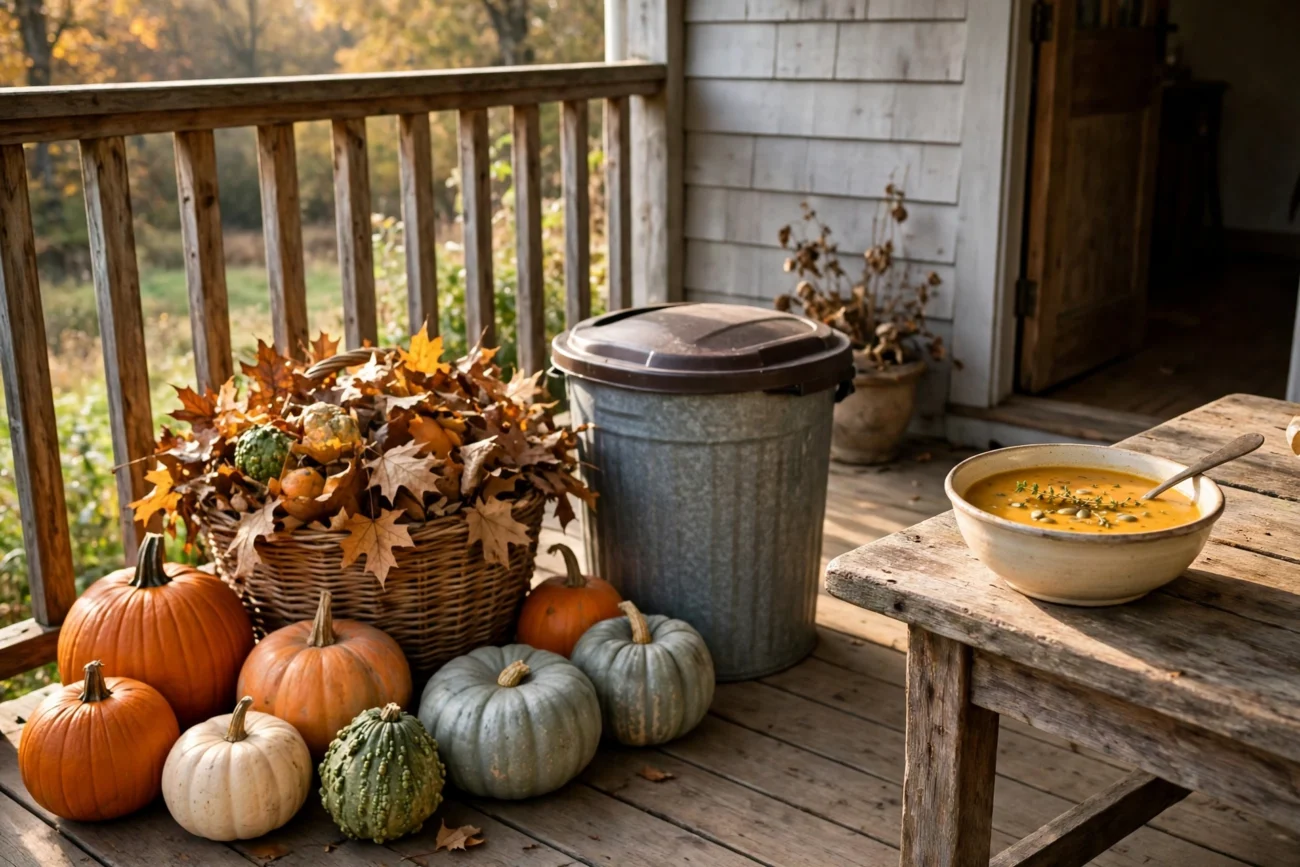
Halloween ends, the candy is sorted, and there they sit: the pumpkins on the porch. The jack-o’-lantern is starting to sag. The uncarved pumpkins by the door still look fine, and it feels wasteful to throw them all in the trash. It is wasteful, too. Every year, millions of pumpkins end up in landfills, where they rot and release methane. Most of them did not have to go there.
The catch is that not every pumpkin should be treated the same way. A firm, uncarved pumpkin is food. A carved jack-o’-lantern that has sat outside for a week is not. A painted pumpkin is not compost. A pumpkin covered in glitter should not be fed to wildlife. The good news is that sorting them takes about two minutes, and once you know which pumpkin you have, the right next step is obvious. This guide walks through each case, in order, so nothing useful goes to waste and nothing unsafe gets eaten.
First, Sort Your Pumpkins in Two Minutes
Before you do anything else, look at each pumpkin and put it in one of four groups. This one step prevents almost every mistake people make with leftover pumpkins.
Group one: firm, uncarved, and undecorated. The skin is intact, there is no paint, glitter, glue, or wax, and the pumpkin feels heavy and solid with no soft spots or mould. This pumpkin can still be food, decoration, or a donation.
Group two: carved, but plain. It was cut open and displayed, with no paint or glitter, and it has been outside for only a few days. It is too far gone to eat safely, but it is perfect for compost — as long as you remove candles, lights, and any decorations first.
Group three: painted, glittered, glued, or otherwise decorated. The surface has been treated with materials that do not belong in food, compost, or an animal’s stomach. These pumpkins need the trash, unless you can fully remove the decoration and the pumpkin underneath is still sound.
Group four: soft, mouldy, collapsing, or smelly. This pumpkin is done. Remove it from the porch, keep it away from walkways and doors, and compost it if it is plain, or bin it if it is decorated. Do not leave a rotting pumpkin sitting by the entrance while you decide. A jack-o’-lantern typically stays attractive for only a few days to a week after carving, depending on the weather. Warm temperatures speed up decay and mould. Uncarved pumpkins, kept dry and protected from freezing, can stay in good condition for several weeks or even months — many October porch pumpkins look fine right through Thanksgiving.
The Golden Rule: Never Eat a Displayed Jack-o’-Lantern
This is the rule that matters most, and it is the one people most often get wrong. A carved pumpkin that has been on display — especially outdoors — should not be eaten, no matter how good it still looks. Cutting the pumpkin open exposes the flesh to air, moisture, dirt, insects, candle residue, and microbes. A few days on a porch is enough to make it unsafe as food, even if the outside still looks cheerful.
The safe way to eat a pumpkin is to separate the edible parts before it becomes a decoration. If you are carving this year, scoop out the flesh and seeds with clean tools before the pumpkin goes outside, and refrigerate or freeze them promptly — within two hours of cutting. Those clean, separated pieces can be cooked. The jack-o’-lantern itself cannot, and should not, be rescued for dinner a week later.
The same rule applies to donations. Do not donate a carved, displayed, or decaying pumpkin to a food programme, a farm, or a zoo unless you have asked first and they have confirmed they will take it in that condition. Many farms and animal sanctuaries do accept plain, fresh pumpkins for animal enrichment or feed, but acceptance varies, and a decorated or spoiled pumpkin can do harm. Always ask before you drop one off.
Eat the Good Ones: Cooking Pumpkins, the Easy Way
If your pumpkin is firm, uncarved, and undecorated, it is still food — and November is the perfect time to cook it. Small «pie pumpkins» or sugar pumpkins are the best for cooking: they have smoother flesh and a richer, sweeter flavour. The large field pumpkins sold for carving are also edible, but their flesh tends to be watery, stringy, and less sweet. They still make a perfectly good soup or puree, especially with seasoning. Either way, check for soft spots, mould, or damage first. If it is soft or rotting, it is compost, not dinner.
The simplest method is roast-and-puree. Cut the pumpkin in half, scoop out the seeds and strings, place the halves cut-side down on a baking tray, and roast at around 400°F (200°C) until the flesh is soft when poked with a fork — usually 45 to 60 minutes, depending on size. Let it cool, scoop out the flesh, and blend it until smooth. That puree is the base for almost everything: soup, pie filling, muffins, bread, pancakes, and pasta sauce.
For soup, soften an onion and a couple of garlic cloves in butter or oil, add the puree and vegetable or chicken broth, and simmer for fifteen minutes. A splash of cream, a pinch of nutmeg, and salt and pepper are all it needs, although cumin or curry powder makes a warmer, spicier version that suits a cold November evening. Pumpkin puree freezes well in measured portions — one-cup bags or containers — so a single large pumpkin can supply soups and baking all winter.
Compost the Rest — the Right Way
Composting is the easiest good ending for a plain carved or spoiled pumpkin, and pumpkins are excellent compost material. They are about 90 percent water, rich in nitrogen and moisture, and they break down fast — usually in eight to twelve weeks in an active pile. The trick is balance. Because pumpkins are wet and nitrogen-rich, they need to be mixed with dry, carbon-rich material: dry leaves, straw, shredded paper, or dried garden debris. Without that balance, a whole pumpkin in a pile can turn slimy, smelly, and attractive to raccoons, rodents, and other animals.
Chop or crush the pumpkin into smaller pieces first. Remove every candle, tea light, light string, sticker, and decoration. If the pumpkin is painted or glittered, do not compost it: paint, glitter, glue, wax, and sealants do not belong in compost, and they can contaminate the finished material. A painted pumpkin goes in the trash, or the decoration must be fully removed first — which, for most painted pumpkins, is more work than it is worth.
If you do not have a compost pile, you have two other good options. Bury pumpkin pieces directly in a garden bed, covered with several inches of soil, where they will break down over the winter and add organic matter to the soil. Or look for a community option: many towns run pumpkin-collection programmes, community composting drop-offs, or «pumpkin smash» events in early November, where smashed pumpkins are collected for commercial composting. A quick search for your town’s name plus «pumpkin compost» or «pumpkin smash» will usually tell you what is available. Do not assume a site accepts pumpkins — check first.
Reuse It in the Garden: Planters, Feeders, and Fall Decor
A hollowed-out pumpkin makes a charming temporary planter. Fill it with soil, tuck in pansies, violas, ornamental kale, or a small succulent arrangement, and set it on the porch. It will look festive for a few weeks, and when the pumpkin starts to soften, you can plant the whole thing — pumpkin and all — in the garden or add it to the compost. The pumpkin breaks down, the plant keeps growing, and nothing is wasted.
A halved pumpkin can also become a simple bird feeder. Scoop out the flesh, thread wire or string through the sides, hang it from a tree branch, and fill it with bird seed. It will last a few weeks before it softens, and when it does, compost the remains. This works best with a plain, unpainted pumpkin. Do not use a painted or glittered one, and do not fill a feeder with pumpkin flesh that has gone mouldy.
Wildlife: Helpful Sometimes, Harmful If Done Wrong
Pumpkins can be a seasonal treat for backyard wildlife — deer, squirrels, rabbits, and some birds will eat the flesh and seeds — but this is the area where good intentions most often go wrong. The safe version is narrow: only plain, undecorated pumpkins, only in small pieces, and only on your own private property, where you can see what happens and remove anything that is not eaten.
Do not dump pumpkins in parks, woodlands, waterways, roadsides, or on someone else’s land. Pumpkins are not a natural woodland food, and leaving them in wild places can attract animals to the wrong locations, spread disease, and create litter. Conservation groups in several countries have specifically asked people not to leave pumpkins in the woods, because they can make some animals, such as hedgehogs, very ill. The same caution applies to painted, glittered, or mouldy pumpkins left anywhere outdoors: the decorations can be harmful if eaten, and mouldy flesh can be harmful too.
What Never to Do With a Leftover Pumpkin
Do not eat a carved pumpkin that was displayed outdoors. Do not eat or donate any pumpkin with mould, animal damage, paint, glitter, glue, or an unknown treatment. Do not put painted, glittered, or wax-coated pumpkins in compost. Do not dump pumpkins in a park, woodland, ditch, or vacant lot, and do not leave them on someone else’s property. Do not feed pumpkins to wildlife unless a local authority or sanctuary has explicitly said it is welcome. And do not leave a soft, collapsing pumpkin by the front door while you decide what to do with it — remove it, compost it if it is plain, and bin it if it is not.
For more fall-at-home ideas, see why Americans carve pumpkins, how to prepare your home for winter, and The November Home Reset.
