Every year, winter seems to arrive all at once. One week you’re raking leaves in a light jacket, and the next you’re scraping ice off the windshield and wondering why the living room feels so drafty. The good news is that most cold-weather home problems — frozen pipes, a furnace that quits on the coldest night, ice dams on the roof — are preventable with a weekend or two of simple checks in the fall.
You don’t need to be handy, and you don’t need to spend a fortune. Most of the items below cost little or nothing, and the few that involve hiring a pro are far cheaper in October than in the middle of a January cold snap, when every heating company in town has a two-week waiting list. Work through this list room by room and outside bit by bit, and your home will be ready long before the first real snow flies.
When should you start? A good rule of thumb is to work through the list when you set your clocks back, or when nighttime temperatures start dipping into the 30s. In the northern states that might be mid-October; further south, you may have until November. The exact week matters less than simply finishing before the ground freezes and the first storm watch scrolls across your weather app.
Inside: Keep the Heat In and the Pipes Happy
1. Give your furnace or boiler an annual checkup. Before you rely on your heating system every day, have a technician inspect, clean, and tune it. They’ll check the burners, test for carbon monoxide leaks, and make sure everything is running efficiently. A fall tune-up usually costs far less than an emergency repair visit — and it catches small problems while they’re still cheap to fix.
2. Change the filter and test the thermostat. A clogged filter makes your furnace work harder and can even cause it to overheat and shut down. Swap in a fresh one now, and stock a couple of spares for the season. Then turn the heat on for a full cycle on a mild day: listen for strange noises and confirm warm air actually reaches every room. If you have radiators, this is also the moment to bleed trapped air from them.
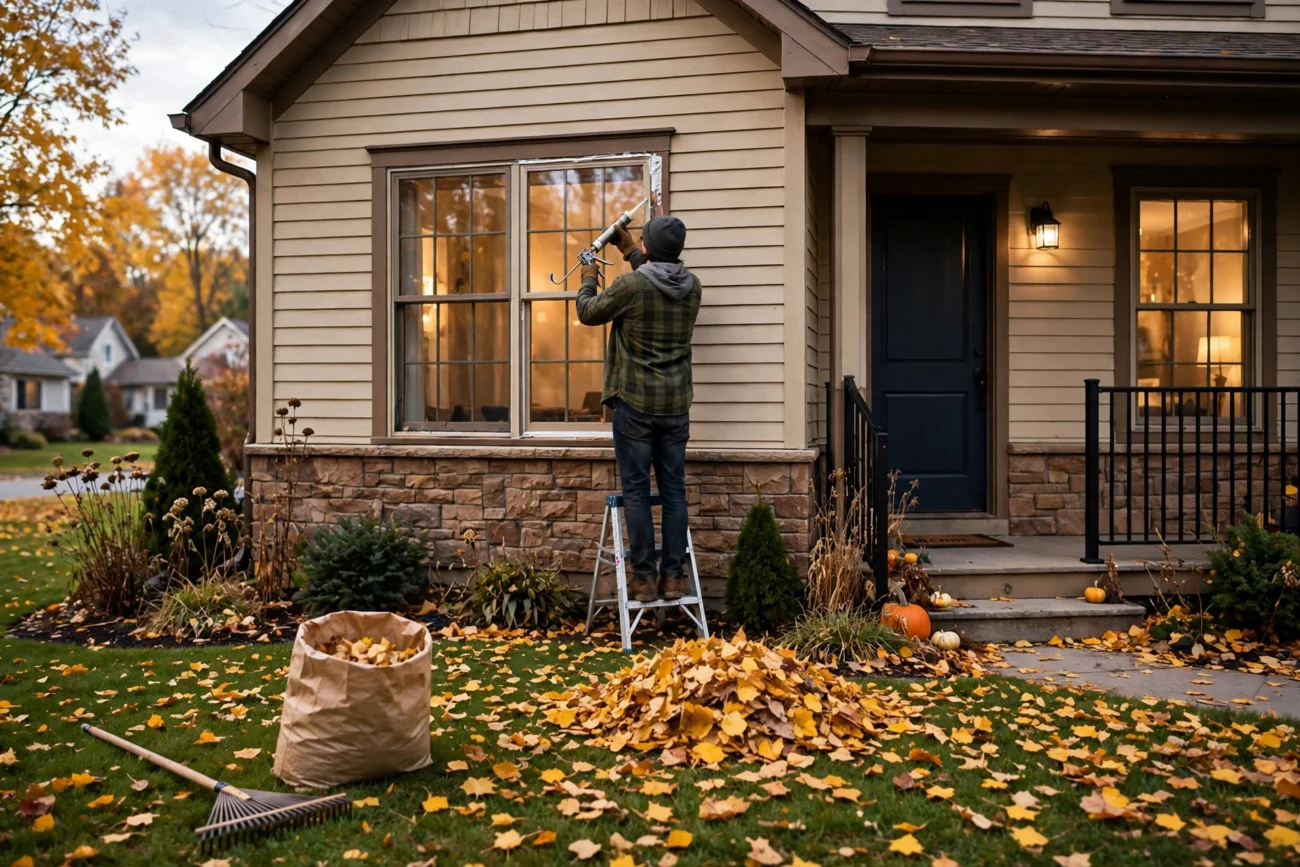
3. Hunt down drafts around windows and doors. Hold a lit incense stick or a thin strip of tissue near window frames, door edges, and electrical outlets on a windy day — wherever it flutters, warm air is escaping. Seal window frames with caulk outside and removable rope caulk or weatherstripping inside, and add a door sweep or draft stopper at exterior doors. A few dollars of sealant can make a whole room noticeably warmer.
4. Reverse your ceiling fans. Most fans have a small switch on the motor housing that changes the direction of the blades. In winter, run them clockwise on the lowest speed: this gently pushes the warm air that collects at the ceiling back down along the walls, without creating a breeze. It’s a two-minute job that makes heated rooms feel more even.
5. Insulate exposed pipes. Pipes in unheated basements, crawl spaces, garages, and along exterior walls are the ones that freeze and burst. Slip foam pipe sleeves over them — they cost very little at any hardware store and cut on with a pair of scissors. Pay special attention to pipes near vents or drafty corners, and plan to open cabinet doors under sinks on very cold nights so warm room air can reach the plumbing.
6. Take a peek at the attic insulation. Heat rises, and if your attic insulation is thin, patchy, or flattened, you’re paying to warm the sky. You don’t need to be an expert: if you can easily see the tops of the floor joists, your insulation is probably on the thin side. Adding a layer is a common DIY project with bagged insulation, or a straightforward one-day job for an insulation contractor.
7. Know where your main water shutoff is. If a pipe ever does burst, every minute counts. Find your main shutoff valve now — it’s often in the basement near the front wall, by the water meter, or in a utility closet — and make sure everyone in the house knows where it is and how to turn it. Test that it actually turns; older valves sometimes seize up.
Outside: Roof, Gutters, and the Yard
8. Clean the gutters and downspouts. Gutters clogged with wet leaves can’t drain properly, and backed-up water is a main ingredient in ice dams, which can force water under your shingles and into the walls. Scoop out the debris, flush the downspouts with a hose, and make sure water is directed away from the foundation. If climbing ladders isn’t your thing, gutter cleaning is one of the more affordable services to hire out.
9. Give the roof a once-over from the ground. You don’t need to climb up there: walk around the house with a pair of binoculars and look for missing, curled, or cracked shingles and damaged flashing around chimneys and vents. Trim back any tree branches hanging over the roof, since ice and snow load can bring a weak limb down in a storm. Small roof fixes now are minor; the same leak found in February is not.
10. Have the chimney and fireplace inspected. If you burn wood, a professional sweep should inspect the chimney once a year and clean out creosote, the flammable buildup that causes chimney fires. Even if you don’t use the fireplace, check that the damper opens and closes properly, and consider a chimney cap to keep out animals, rain, and cold air. Order firewood early, and store it off the ground, covered on top but open at the sides so it stays dry.
11. Shut off and drain outdoor faucets. This is the frozen-pipe job people forget most often. Disconnect and drain all garden hoses and bring them inside. Then close the indoor shutoff valve for each outdoor faucet, open the faucet outside to let the remaining water run out, and leave it open. An inexpensive foam faucet cover adds one more layer of protection.
12. Put the yard to bed. Drain and store the garden tools you’ll no longer use, and if you have an in-ground sprinkler system, have it blown out before hard freezes so the lines don’t crack. Cover the air-conditioning condenser or slide a board under its lid to keep snow and debris out of the top, and bring in or cover patio furniture and cushions. Finally, place a bag of ice melt and a sturdy snow shovel by the door you actually use — not buried in the back of the garage.
Safety and Emergency Supplies
13. Test smoke and carbon monoxide detectors. Winter is peak season for house fires and carbon monoxide incidents, because furnaces, fireplaces, and space heaters run for months straight. Press the test button on every detector, replace batteries that are more than a year old, and check the date on the units themselves — most detectors should be replaced after about ten years. There should be a carbon monoxide detector on every level of the home, especially near bedrooms. While you’re at it, check any space heaters too: set them on a flat, hard surface well away from curtains, bedding, and furniture, and plug them directly into a wall outlet rather than an extension cord or power strip.
14. Put together a simple storm kit. A winter storm can knock out power for hours or days. Gather flashlights with fresh batteries (one per person, ideally), a battery-powered or hand-crank radio, bottled water, a few days of easy food that doesn’t need cooking, warm blankets, basic first-aid supplies, and a portable phone charger kept topped up. If anyone in the home depends on medication, keep a small buffer supply if you can. Store it all in one bin so you’re not hunting through closets by candlelight.
15. Don’t forget a basic car kit. Your car is part of winter readiness too. Toss in an ice scraper and brush, a warm blanket, jumper cables or a jump-starter pack, a small shovel, a bag of sand or kitty litter for traction, a flashlight, and a few snacks and bottles of water. Check your tire tread and pressure, top up the windshield washer fluid with a winter blend, and try to keep the gas tank at least half full so fuel lines don’t freeze and you’re never stranded on empty.
A Weekend Now Saves a Headache Later
None of these fifteen checks is difficult on its own, and most of them take under an hour. Spread them over two fall weekends — inside jobs on a rainy Saturday, outside jobs on a crisp Sunday — and you’ll head into the season with a warmer house, lower heating bills, and far fewer surprises. Winter is a lot easier to enjoy from the couch with a hot drink when you know your home is ready for it.
Looking for more seasonal ideas for around the house? Browse our Lifestyle section for more everyday tips and inspiration.

2 comentarios en «How to Prepare Your Home for Winter: 15 Simple Checks to Do Before the First Snow»