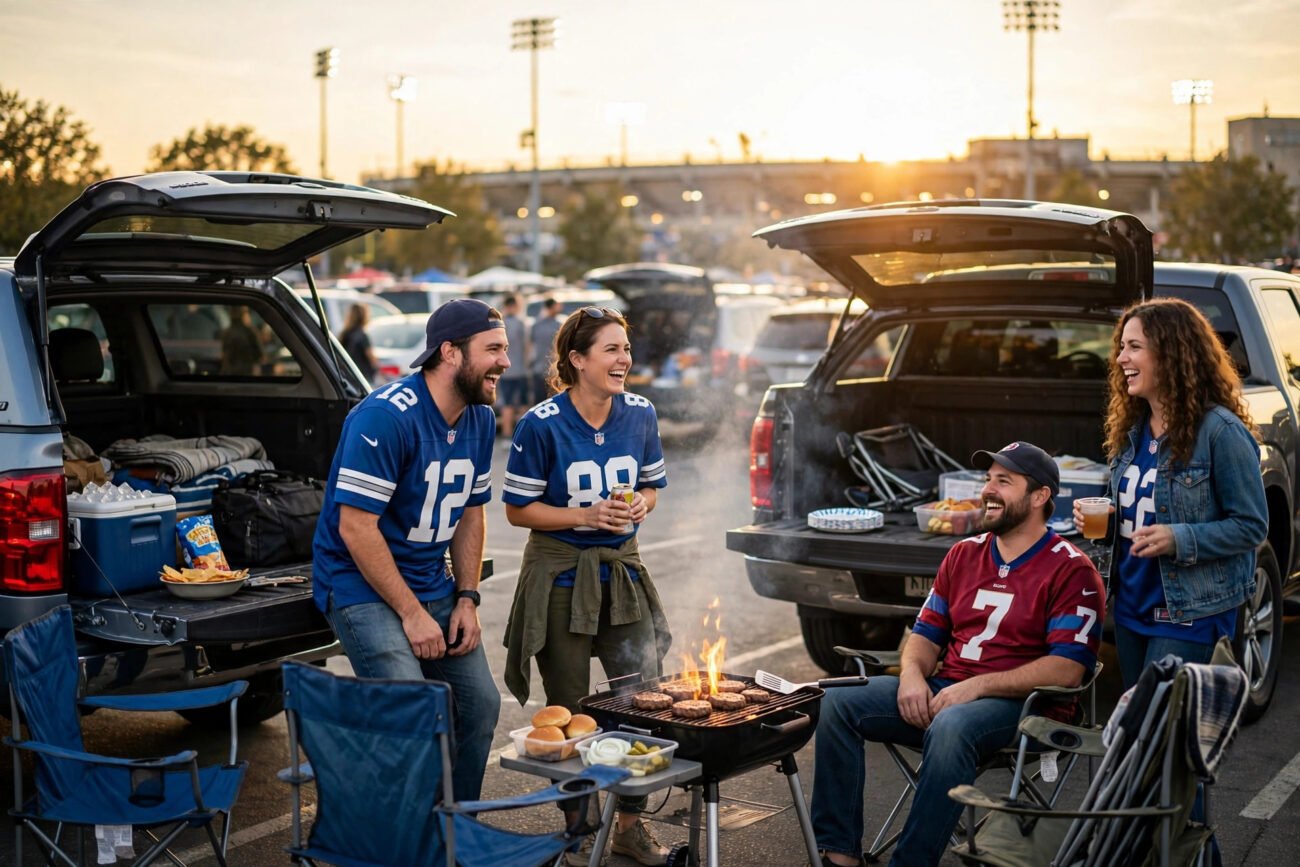
Every country has habits that feel completely normal to locals and completely baffling to everyone else. The United States, being large, young, and built by immigrants from everywhere, has collected more than its share. Some of these traditions surprise visitors because they are so casual; others because they are so elaborate. What almost all of them have in common is a story — usually a practical one — behind the oddity. (Some are so woven into daily life that Americans debate them too; we have even written about American traditions some people think should be retired.)
1. Tipping Almost Everyone
Visitors from countries where service is included in the price are often stunned: in the US, you are expected to add 15–20% (now often more, with tablet screens suggesting up to 25–30%) to a restaurant bill, and to tip bartenders, hairdressers, taxi drivers, and hotel staff too.
The reason is structural. Federal law allows restaurants to pay tipped workers a base wage as low as $2.13 an hour in some states, on the assumption that tips make up the difference. The custom spread after the Civil War, when employers used tipping to avoid paying full wages to service workers. Whatever its history, today the tip is not a bonus; for many workers it is most of the paycheck.
2. Tailgating Before Football Games
Arriving at a stadium hours before a game to cook burgers on a portable grill in the parking lot, surrounded by folding chairs, coolers, and team flags, strikes many visitors as a second event competing with the game itself. Sometimes it is.
Tailgating grew out of college football culture in the early 1900s, when fans arrived with picnic hampers. The name comes from the lowered tailgate of a pickup or station wagon used as a serving table. In places like Green Bay or Baton Rouge, the parking lot party — grills, cornhole, fierce loyalty — is a weekly autumn ritual that binds whole communities together.
3. Black Friday Shopping Chaos
The day after Thanksgiving, stores open at dawn with steep discounts, and shoppers line up in the cold for televisions and toys. The name has two candidate origins: Philadelphia police in the 1950s used «Black Friday» for the traffic chaos, and retailers later embraced the idea that the day’s sales push their accounts «into the black.»
It surprises visitors less for the discounts than for the timing — the biggest shopping frenzy of the year lands in the middle of a holiday supposedly about gratitude and family. It remains one of the highest-grossing retail days annually, though online sales have spread the chaos across the whole weekend.
4. Prom
For American teenagers, prom is a formal dance near the end of the school year involving rented tuxedos, elaborate dresses, corsages, and limousines. Visitors from countries where school dances are casual find the scale — and the spending — astonishing.
Prom is short for «promenade,» and it began in the late 1800s at Ivy League colleges as a formal class banquet where students quite literally promenaded. It trickled down to high schools in the early 20th century and grew into a rite of passage, complete with «promposals» — elaborate public invitations that are a tradition of their own.
5. Homecoming
Homecoming is a week of school-spirit events — parades, pep rallies, a football game, and a dance — built around welcoming alumni back to campus. Visitors often ask why a school would stage a reunion for everyone, every single year.
The tradition is usually credited to the University of Missouri, whose athletic director invited alumni to «come home» for a 1911 football game against rival Kansas to boost attendance. It worked, and the formula — game plus parade plus dance — spread to universities and then high schools nationwide, especially in the Midwest and South.
6. Yard Sales and Garage Sales
On spring and summer weekends, Americans sell used belongings from their driveways: clothes, furniture, toys, and mysterious kitchen gadgets, priced with little stickers and open to haggling. To visitors, turning your front yard into a shop is delightfully strange.
Yard sales descend from older «rummage sales» run by churches and charities, and they boomed in the post-war suburbs, where garages — and the stuff filling them — became standard. They survive because they combine decluttering, a little cash, and a social morning on the street, and because one person’s attic junk reliably contains another person’s treasure.
7. The Thanksgiving Day Parade
Since 1924, Macy’s department store has sent giant helium balloons of cartoon characters down the streets of Manhattan on Thanksgiving morning, watched by millions on TV. A parade of floating cartoons before a turkey dinner is, admittedly, a peculiar ritual.
The parade was started by Macy’s employees, many of them European immigrants who wanted to celebrate their new home with the street festivals they remembered. Live zoo animals marched in the first parades; the giant balloons arrived in 1927, with Felix the Cat among the first. Santa Claus brings up the rear, on purpose — the parade officially opens the Christmas shopping season.
8. Groundhog Day
Every February 2, a groundhog named Punxsutawney Phil is pulled from a burrow in Pennsylvania, and his «seeing his shadow» is solemnly reported as a prediction of six more weeks of winter. National news covers it. Every year.
The custom comes from German settlers in Pennsylvania, who brought Candlemas weather lore with them: if an animal cast a shadow on the mid-winter holiday, winter would linger. Germany used hedgehogs; Pennsylvania had groundhogs. The Punxsutawney ceremony dates to the 1880s, and its accuracy is gloriously beside the point — it is a mid-winter joke the whole country agrees to keep telling.
9. Baby Showers
Weeks before a baby is born, friends and family throw the mother a party built around gifts — diapers, onesies, themed cake, and games that visitors from many cultures find both sweet and slightly bewildering.
Showers in this gift-heavy form became standard after World War II, during the baby boom, when «showering» the mother with nursery supplies was both practical and festive. The pre-birth timing surprises visitors from cultures where celebrating before the baby arrives is considered bad luck; in the US it is simply how it is done, partly because parents need the gear ready on day one.
10. Block Parties
On summer weekends, whole streets close to traffic so neighbors can set up grills, folding tables, music, and games right on the asphalt. Kids ride bikes in the road, adults carry out potluck dishes, and the fire department sometimes opens a hydrant.
Block parties are strongest in big cities — New York’s are famous — where they grew in the early 20th century as neighborhood celebrations and wartime send-offs. They persist because they solve a modern problem: in places where neighbors barely know each other, one permitted street closure a year does what months of hallway small talk cannot.
11. Friday-Night High-School Football
In thousands of towns, the biggest Friday-night event is a game played by 16- and 17-year-olds — with marching bands, cheerleaders, concession stands, and crowds that fill serious stadiums. In Texas, some high-school stadiums seat more than 15,000 people.
The tradition took hold in the early 20th century, when high schools became the center of small-town identity. The game is the excuse; the real function is civic — it is where the whole community, from toddlers to grandparents, shows up in the same place every week. The TV series and film «Friday Night Lights» introduced the phenomenon to much of the world.
12. Trick-or-Treating
On Halloween night, children in costumes go door to door calling «trick or treat,» and strangers are expected — happily — to hand them candy. Visitors find the organized, neighborhood-wide nature of it charming and a little surreal.
Its roots reach back to Celtic Samhain customs and medieval «souling,» when people went door to door offering prayers for the dead in exchange for food. Irish and Scottish immigrants brought versions of it to America, and it took its modern, candy-centered form after World War II, when sugar rationing ended and suburbs full of children — and doors close together — made it easy. Candy companies did the rest.
The Common Thread
Look closely and most of these traditions do the same job: feeding people, marking a season, or giving a community a reason to gather. The packaging — balloons, groundhogs, parking-lot grills — is pure America, but the impulse underneath is universal. And if some of these customs strike you as due for retirement, you are not alone; we once listed the American traditions some argue should be abandoned — and the debate was exactly as lively as you would expect.
Frequently Asked Questions
How much should I tip in the US, really?
In sit-down restaurants, 18–20% of the pre-tax bill is the current standard for good service; 15% is the floor. Bartenders usually get $1–2 per drink, food delivery around 15–20%, and a few dollars for hotel housekeeping per night. Counter-service tip screens are optional — many Americans tip a small amount or nothing there.
Is Black Friday still a big deal with online shopping?
Yes, though it has stretched into a week of deals plus Cyber Monday online. In-person doorbusters are smaller than their chaotic 2000s peak, but the day after Thanksgiving remains one of the busiest retail days of the year, in stores and online alike.
Do Americans actually believe the Groundhog Day prediction?
No — and that is the point. Phil’s long-term accuracy rate is well under 50%, and everyone involved knows it. The ceremony is a beloved piece of mid-winter theater running since the 1880s; the fun is in the ritual, not the forecast.
Which of these traditions is hardest for visitors to adapt to?
Tipping, almost universally. It is frequent, unwritten, and the «right» amount keeps drifting upward, which makes even experienced travelers anxious. The good news: locals understand the confusion, service workers appreciate any genuine effort, and nobody expects perfection from a first-time visitor.

3 comentarios en «12 American Traditions That Surprise Visitors (And Why They Exist)»