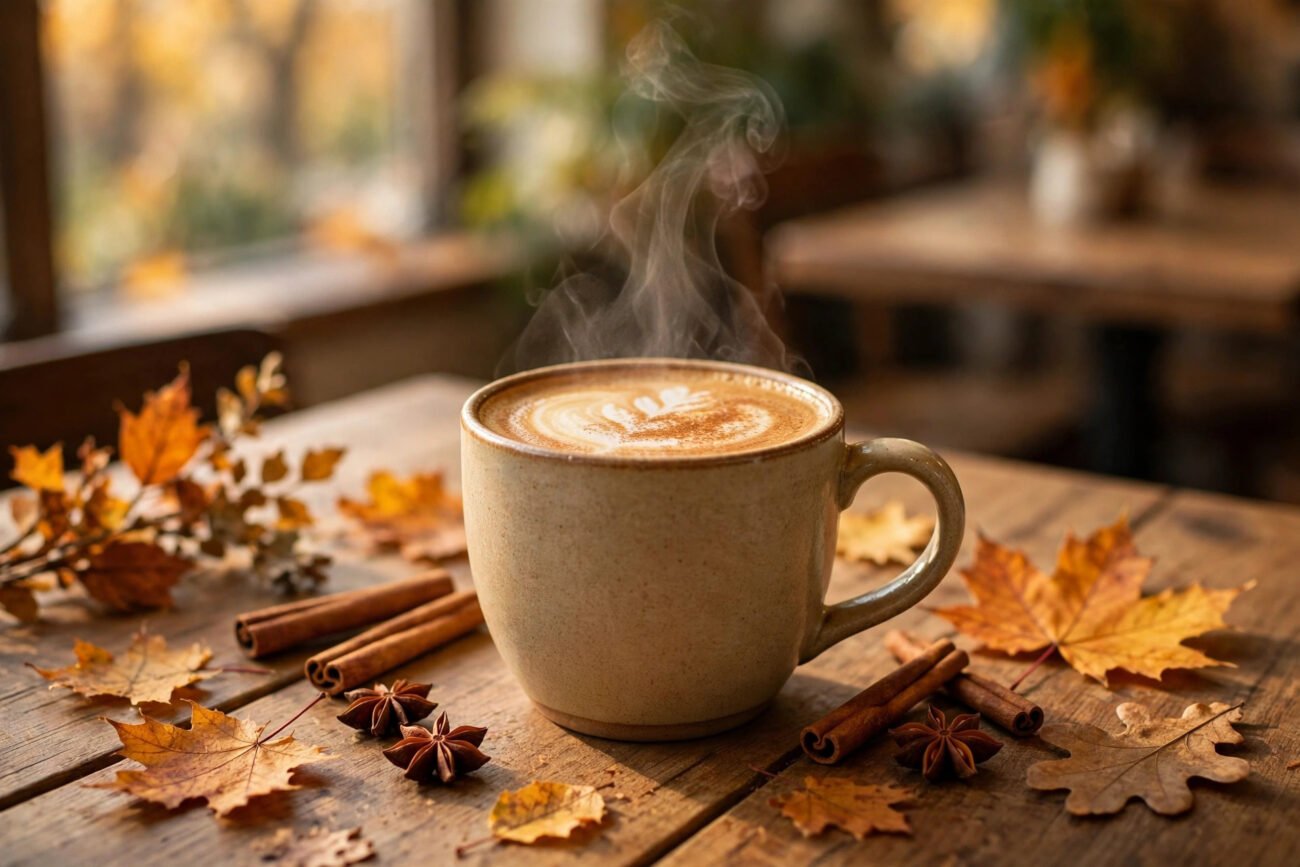
Every fall, without fail, it happens. The air turns crisp, the leaves start to turn, and suddenly everything is pumpkin spice: the coffee, the cereal, the candles, the cookies, the dog biscuits. Some people celebrate the return like a holiday. Others roll their eyes so hard they can see the back of their own skulls. Both reactions are part of the same story — a story that starts in a colonial kitchen, passes through a 1930s spice tin, and explodes in a Seattle coffee lab in 2003.
First, the Twist: There Is No Pumpkin in Pumpkin Spice
The name is a trick, and it has been fooling people for decades. Pumpkin spice is not a pumpkin flavor. It is the blend of warm spices traditionally used to season pumpkin pie: cinnamon, ginger, nutmeg, and allspice, with cloves in most versions and sometimes a pinch of mace. The blend is named for the pie it flavors, not for anything in the jar. A spoonful of pumpkin spice contains exactly as much pumpkin as a spoonful of apple pie spice contains apple — none at all.
That distinction matters because it explains the flavor’s strange power. What you are tasting is not a vegetable. It is a memory: the smell of a pie cooling on a windowsill, a kitchen full of people, a holiday table. The spice blend is a shortcut to all of that, and shortcuts to nostalgia are the most powerful flavors there are.
Chapter One: A Colonial Pie
Pumpkin itself is thoroughly American. Native peoples across North America cultivated squash for centuries, roasting it, drying it, and stirring it into stews. European colonists adopted it eagerly — it was cheap, filling, and grew everywhere — and baked it into pies that looked quite different from ours, layered with sugar, spices, and apples between two crusts.
The proof that the spice combination is older than the country sits in America’s first cookbook. Amelia Simmons published American Cookery in 1796, and it contains two recipes for «pompkin» pie filling: one seasoned with mace, nutmeg, and ginger, the other with allspice and ginger. That is the flavor we know, written down more than two centuries ago. Bakers in 1796 would recognize the smell of a modern pumpkin pie instantly.
For a long time, though, the flavor stayed where it started: in the pie. Spices were expensive — cinnamon from Sri Lanka, cloves and nutmeg from the islands of Indonesia, ginger from tropical Asia — and for most families, spiced pies and cakes were holiday fare, not everyday food. Pumpkin is a late fall crop, so it landed on the Thanksgiving table, and the spices that flavored it became the taste of the holiday itself.
Chapter Two: The Little Tin That Changed Everything
The flavor escaped the pie in stages. In 1936, a recipe for pumpkin spice cakes appeared in the Washington Post — one of the earliest signs of the blend flavoring something other than pie. Around the same era, McCormick began selling a ready-made pumpkin pie spice blend, a single jar replacing four or five separate measuring spoons. By the 1950s, pre-mixed pumpkin pie spice was a pantry staple across America, and the blend had a name simple enough to travel: pumpkin spice.
That jar did something subtle and important. It standardized the flavor. Before it, every family’s blend was slightly different — a pinch more ginger here, a little extra nutmeg there. After it, millions of kitchens tasted the same thing, and a shared flavor became a shared memory. When a flavor lives in everyone’s cupboard, it can become a culture.
Chapter Three: The Seattle Experiment
The final leap happened in 2003, in a Starbucks test kitchen in Seattle. The company was hunting for a new seasonal drink after the success of its peppermint mocha the previous holiday season. Product manager Peter Dukes and a small team poured hot espresso over slices of real pumpkin pie, tasting the combination over and over until they had a rich sauce that tasted like the pie itself. Early customer research rated the idea low on sales appeal and high on uniqueness — which, in hindsight, was exactly the right combination.
The Pumpkin Spice Latte debuted on October 10, 2003, in just 100 stores between Washington, D.C., and Vancouver. Fans noticed immediately, word spread from cup to cup, and Starbucks took it nationwide in the fall of 2004. It became the company’s most popular seasonal drink ever. In 2015, after years of fans asking, Starbucks added real pumpkin to the sauce — the first time the drink named for a pie actually contained the vegetable.
From there, the flavor escaped the coffee cup entirely. Pumpkin spice cereal, cookies, candles, and even Spam landed on shelves. By 2016, pumpkin spice products were reportedly generating around $500 million in annual sales. Grocery stores built entire displays around orange cans and cozy mugs. Fans began treating the first sip of the season like a holiday, posting it on social media the way other people post a first snowfall.
Why Our Brains Fall for It
The marketing world has studied this flavor to death, but the explanation is simpler than the reports make it sound. Three things are doing the work.
First, scent is one of the strongest memory triggers we have. Cinnamon, nutmeg, and ginger do not just taste like fall — they smell like every fall you have ever had, stacked on top of each other. One sip can feel like a shortcut to a season.
Second, scarcity makes it special. Pumpkin spice goes away. The limited-time nature of it — here for a few months, gone by winter — makes each year’s return feel like an event rather than a purchase. Things we can only have sometimes feel more valuable than things we can have always.
Third, it is a ritual. Ordering the first pumpkin spice latte of the year marks the end of summer and gives people permission to move into cozy mode — sweaters, blankets, slower evenings. A drink that tells you what season it is will always outsell a drink that just tastes good.
The Backlash: Pumpkin Spice Everything
No flavor this big escapes mockery, and pumpkin spice has earned its share. The joke writes itself: pumpkin spice dog biscuits, pumpkin spice pasta sauce, pumpkin spice cough drops. When a flavor shows up in products that have no business tasting like pie, the eye-rolls are deserved.
There is also the season creep. Pumpkin spice used to arrive with the first cold snap. Now the launches creep earlier every year, with some products appearing in August, while it is still 90 degrees outside. A flavor that means «fall has arrived» loses its meaning when it arrives before fall does. Part of the backlash is not about the flavor at all — it is about being sold autumn in the middle of summer.
And yet the backlash is also part of the appeal. Loving it, hating it, and joking about it are all ways of participating. A flavor nobody talks about is a flavor that is dying. Pumpkin spice is talked about every single year, by everyone, on both sides — which is why, two decades after the latte, it is still here.
Enjoying It on Your Own Terms
The best way to enjoy pumpkin spice is to stop letting brands decide what it means. Make your own blend — the classic ratio is three tablespoons of cinnamon, two teaspoons of ginger, two teaspoons of nutmeg, one and a half teaspoons of allspice, and one and a half teaspoons of cloves, mixed and stored in a small jar — and you control the flavor completely. More ginger for a bright kick, more cinnamon for sweetness, less clove if the smoky edge is too much.
Then use it the way it was meant to be used, beyond the latte: stirred into morning oatmeal, shaken over roasted butternut squash, folded into pancake batter, whisked into hot chocolate, or dusted over the top of a cappuccino you made at home. The blend is at its best when it seasons real food in your own kitchen, the way it did in 1796 — not when it flavors a candle.
Pumpkin spice survived for more than two centuries because it is not really about pumpkin, or coffee, or marketing. It is about a particular feeling: warmth, home, people gathered close, the year turning. The latte will come and go. The little tin will stay in the cupboard. And every fall, when the air turns crisp, the smell of cinnamon and nutmeg will do what it has always done — tell you that the cozy part of the year has arrived.
If you are leaning into the season, our guide to why Americans love Halloween covers the traditions that make October 31 unforgettable, and our fall foliage guide is the place to start if the changing leaves are calling you outside.

Un comentario en «Pumpkin Spice: How a Pie Seasoning Became America’s Favorite Fall Obsession»